
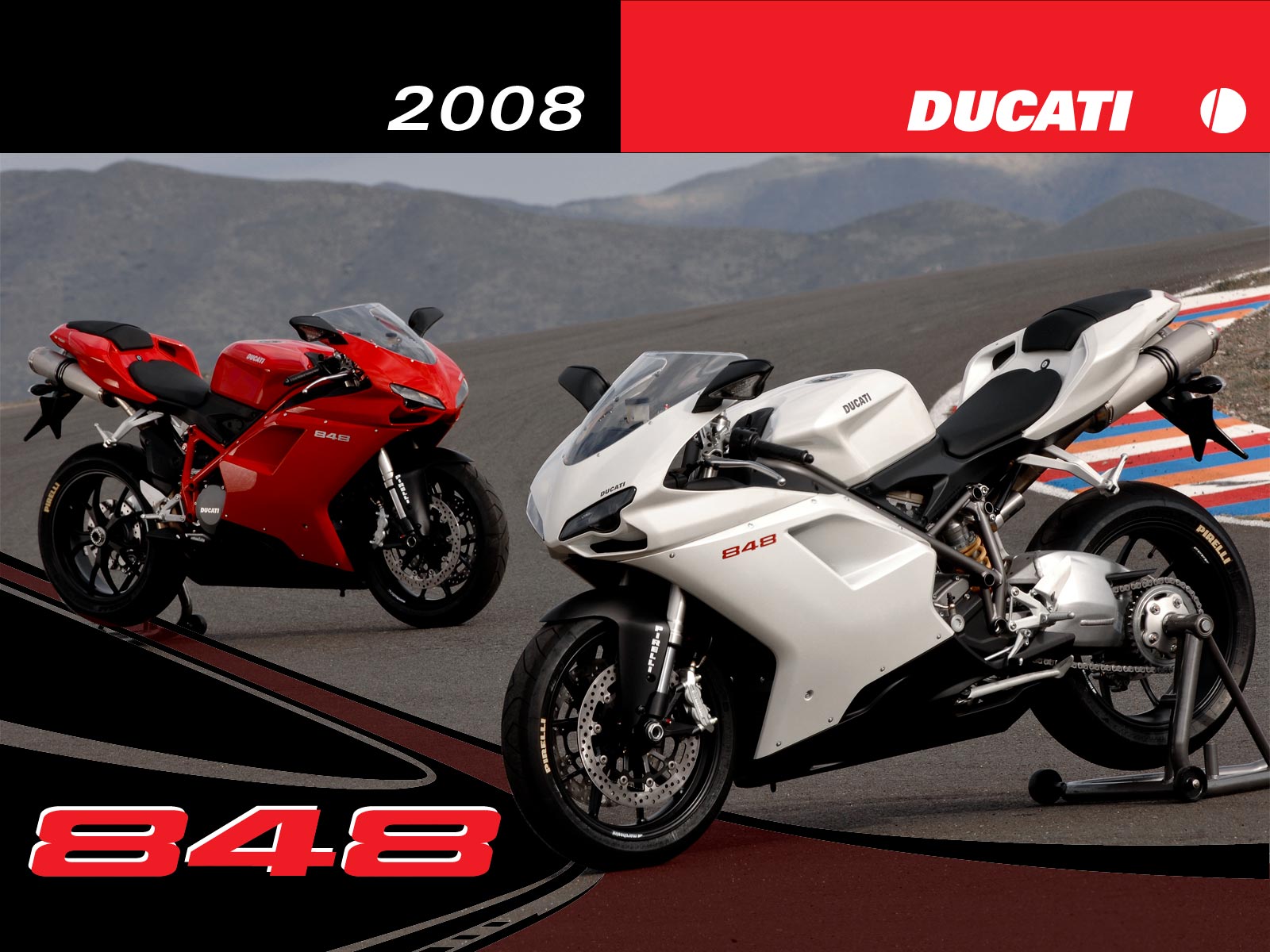


In Borgo Panigale, the men weep, the women faint, as Ducati introduces the 848 to the world.
When you think of hallowed Italian marque of Ducati, several glorious models come to mind, such as 750 Supersport, the iconic 916, the successful line of Monsters, and the exciting 1098 superbike and Hypermotard wild thing.
But not many revere the 749, a middleweight V-Twin based on the platform of the little-loved 999, whose styling failed to ignite the passions of even the Ducatisti. While a fairly competent machine, the 749 weighed nearly as much as the 999 and wasn’t on anyone’s list of prettiest bikes.
All that changed with the introduction of the 848. It not only shared the sexy shape of the ridiculously successful 1098, it also shames the legendary 916 in terms of horsepower output with a tested 115.6 hp at the rear wheel. You have to remember that the revered Ducati 916 had a hard time cracking the 100-hp barrier, and the beefier 998 barely topped 110 rear-wheel horsepower while weighing considerably more than the Weight-Watchers 848.
The 848 motor used a new vacuum die-casting method called Vacural which results in an engine that weighs about 7 lbs less than the old 749. The “Testastretta Evoluzione” motor uses a 94.0 x 61.2mm bore and stroke to yield 849cc. No, that’s not a typo - this continues Ducati’s disregard for its nomenclature matching the engine’s displacement: the old 749 displaced 748cc; the standard 999 was 998cc; and the 1098 has a 1099cc engine.
The svelte 848 is nestled in a trellis frame developed in cooperation with Ducati Corse. The frame uses a simplified tube layout from the Ducati 749 featuring main section tubes that are enlarged in diameter from 28 mm to 34 mm, while being reduced in thickness from 2 mm to 1.5 mm. The result is a 14% increase in rigidity and a weight saving of 3.3 lb helping the 848 weigh in 44 pounds less than the 749.
The bottom-line is the Ducati 848 had a liver-quivering top-speed of 159 mph.
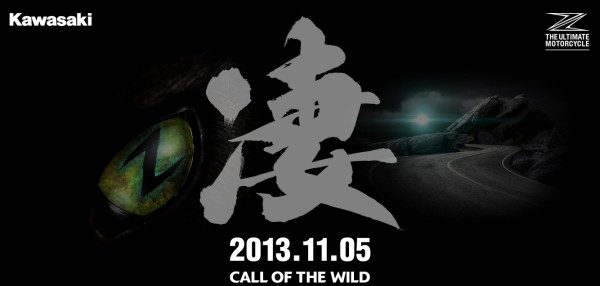

Kawasaki shows the world the 2014 Z1000 Ninja for the very first time at the 71st EICMA show in Milan, Italy.
Reflecting a radical new design philosophy, the Z1000 is a result of Kawasaki’s unique *'Sugomi' approach, which has "created a machine with the palpable energy and appearance of a predatory animal stalking its prey" (their words).
The Z1000 is expected to be equipped with a new 998cc, 6-speed, liquid-cooled, 200 hp, 4-stroke in-line Four, DOHC 16-valve engine. Oh yeah, before I forget, digital fuel-injection.
On Kawasaki's website they posted a teaser video of the bike that doesn’t show too many details except for a few elements like the front headlight with quad lamps, the Z1000-signature quad exhaust pipes and wheels.
It certainly seems to have all it needs to make us fall in love with it and it has the necessary pedigree to compete with models like the Aprilia V4 Tuono, BMW S1000 or the newly released KTM Super Duke 1290.
Flights to Milan are still available. The show is on until November 10. Well, what are you waiting for?
*Sugomi: The Japanese word “Sugomi” describes the intense aura or energy given off by a person or object of greatness and felt by the viewer. Someone, or something, possessing Sugomi inspires awe, leaves an indelible impression, is daunting in stature or ability, and commands respect.


Frederick William "Flying Freddie" Dixon dies in Reigate, Surrey.
In 1912, at 19, he rode in his first Isle of Man TT. Freddie Dixon had began forging a name for himself, as both a mechanic and rider years earlier, competing in speed and hill climb events in and around Stockton-on-Tees.
After spending four years in the Army Service Corps during WWI he started his own business, Park Garage on Linthorpe Road, Middlesbrough. It was there that he began designing a sidecar banking system. His work would pay off when Freddie and his passenger Thomas Denney won the 1923 Isle of Man TT riding a Douglas fitted with his banking system. His design raised or lowered the sidecar to suit the particular race circuit bends.
As a HRD factory rider, Dixon would win the 1927 TT becoming the first man to win both a sidecar and solo race at the Isle of Man. He retired from motorcycle racing in 1928.
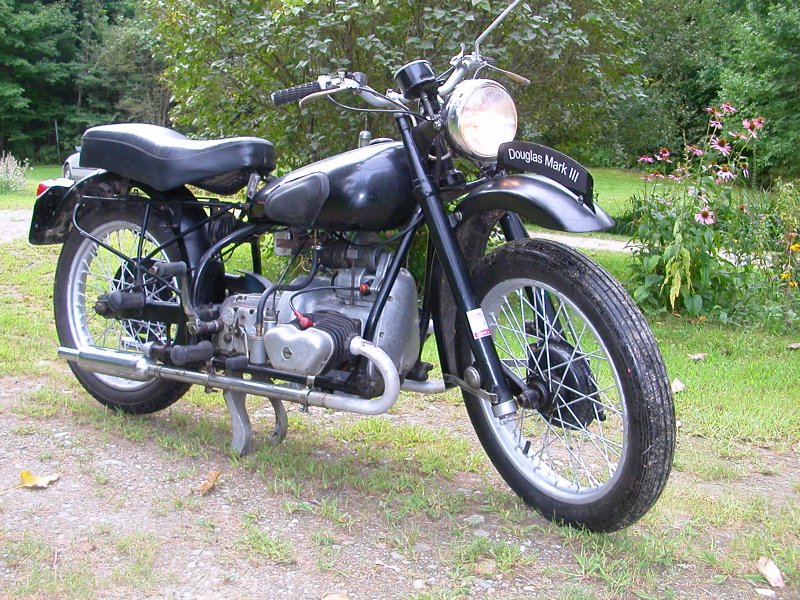
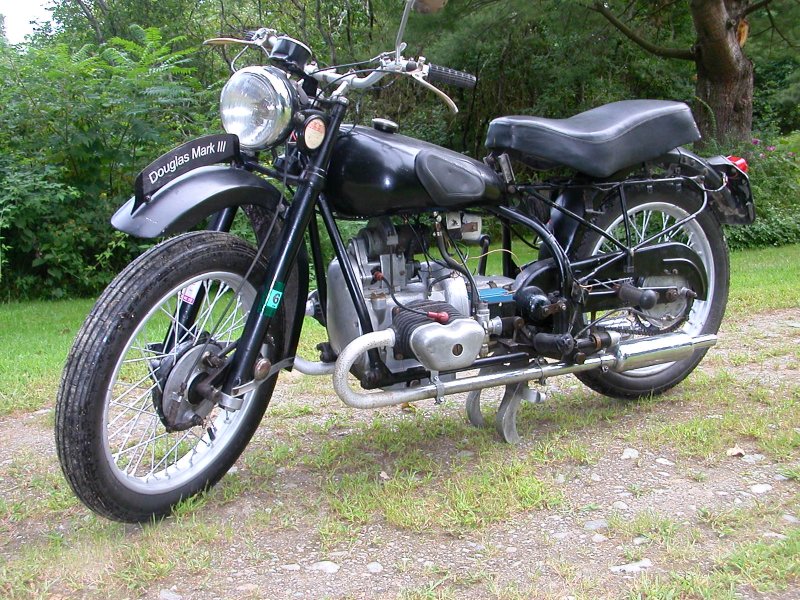
1948 Douglas hired Freddie to help design on their newest project. Working with ex-Sunbeam designer Erling Poppe (Technical Director) and ex-Norton CS1 designer Walter Moore (Works Superintendent). The old Douglas motor was essentially a generator, designed to run for long periods at a steady speed but it didn't cope well with the varying engine speeds of motorcycle racing. It also had a tendency to shake sideways at low engine speeds which was due to the horizontally opposed engine. The team worked day and night for 5 1/2 months, when the garage doors finally opened the world was introduced to the 1949 Douglas Mark III. Using the design Douglas also produced a Mark III De Luxe, a Mark III Sports, and a rigid-framed motorcycle trials Mark III Competition.
In 1950, David Tye, won the Nevis Trophy and the Special First Class Award in the demanding Scottish Six Days Trial riding the Douglas Mark III Competition model.
The same year works rider Don Chapman, on the Mark III Sports, gave Douglas their only major successes in motorcycle racing by winning at the Silverstone Circuit.
Freddie Dixon was also one of the few motorsport competitors to have been successful on two, three and four wheels. He was twice awarded the BRDC (British Racing Drivers Club) Gold Star.

_1725_detail.jpg)


On November 1, 1945, change comes to Springfield, E. Paul du Pont hands over the keys to Indian Motorcycles.
In 1930, Indian merged with DuPont Motors. DuPont Motors founder E. Paul du Pont decided to cease production of DuPont automobiles and concentrate all of the company's resources on Indian. du Pont's paint industry connections resulted in no fewer than 24 color options being offered in 1934. Models of that era began using Indian's famous head-dress logo on the gas tank.
In 1940, Indian sold nearly as many motorcycles as its major rival, Harley-Davidson. During this time, the company also manufactured an array of other products such as aircraft engines, bicycles, boat motors and air conditioners. Anything to keep the boat afloat. When du Pont first took over Indian was losing hundreds of thousands of dollars annually, but by 1939 the company was earning unprecedented profits, in part due to the military demands of the Allies at the start of World War II and the rush of domestic buyers anticipating the scaling back of civilian production during a time of war. While the turnaround was good for Indian, it also made the company more attractive for a possible buyout.
By the mid-1940s, du Pont’s health was failing and he felt he could no longer manage the day-to-day operations of Indian. He and the board of directors began entertaining offers to buy Indian over cocktails at a local Springfield gin-joint. In 1945, a group headed by Ralph Rogers purchased a controlling interest of the company. On November 1, 1945, du Pont formally turned the operations of Indian over to Rogers.
Under Rogers' control, Indian discontinued most of it's profitable and best selling bikes (good financial move there, Ralphy-boy) and began to manufacture lightweight motorcycles such as the 149 Arrow and the Super Scout 249, both introduced in 1949, and in 1950 introduced the 250 Warrior. Production of traditional Indians was extremely limited in 1949, and no 1949 Chiefs are known to exist. Sadly, Indian halted all production in 1953.
du Pont will be remembered for keeping Indian open during the darkest days of the Depression by focusing on its core business of building motorcycles. He backed the engineering department’s continued development of improved models and kept the company’s racing program vibrant under the new Class C rules. He was also an enthusiastic backer of the AMA and was involved in activities of the association. He died at the family estate in Delaware on September 26, 1950.
E. Paul du Pont was inducted in the AMA Hall of Fame n 2004.


The Triumph X75 Hurricane prototype was sent to England on October 31, 1969 and sat collecting dust until mid-June, 1970, when it was shipped directly to Cycle World magazine in the US.
The 'factory custom’ is an oxymoron that Harley-Davidson should have a trademark on. They've almost made it an art form for Crissakes. And nearly all other manufacturers have followed suit.
But, it was BSA that pioneered this now-successful formula, with Craig Vetter’s strikingly styled X75 Hurricane in 1973. Not only was the X75 the world’s first 'factory custom', it also influenced later mainstream motorcycle design.
The Hurricane grew out of the lukewarm response to the original BSA Rocket Three in the US. It was considered the ugly girl in the back row so, in 1969, BSA in the US approached a young designer, Craig Vetter, to produce a prototype custom Rocket Three.
Vetter’s own philosophy was to contrast the age-old traditions of the British motorcycle industry with the American underground youth culture.
He set to work on a stock 750cc BSA Rocket Three, creating a single curvaceous molded gas tank, seat and side panels. The 750cc three-cylinder engine was left basically stock, Vetter modified the cylinder head by enlarging the fin area. This was done purely for aesthetic reasons, as were the black-painted cylinder barrels.
The distinctive triple mufflers sweeping to the right were derived from those of the Team BSA flat tracker. These may have worked well on left-turns but they severely limited right-hand-side ground clearance. Oops.
Going for a leaner look, Vetter installed separate instruments and a traditional chromed headlamp. The gaitered forks also made way for what was considered cleaner Ceriani-style ones, these were later lengthened 50mm by Pete Coleman at BSA in the UK for a slight 'chopper' look. Painting the prototype in ‘Camaro Hugger Red’, Vetter had this up and running by September, 1969.
BSA executives approved a limited-production run of the Vetter Rocket during 1971 to test the market which, at the time, was a huge surprise considering the company was walking on eggshells financially. However, piss-poor management saw the entire Triumph and BSA line-up miss the 1971 US season and it wasn’t until late 1971 that the pre-production Vetter Rocket appeared.
When production ended in January 1973, only 1172 were built.
Little known fact - BSA in the UK initially knew nothing of the Hurricane project. It was conceived by Don Brown, director of the BSA Group’s eastern facility, BSA INC., in Nutley, New Jersey. The project was financed from office petty cash and kept secret from BSA Group management in England until it was completed. Brown resigned from BSA in 1970.
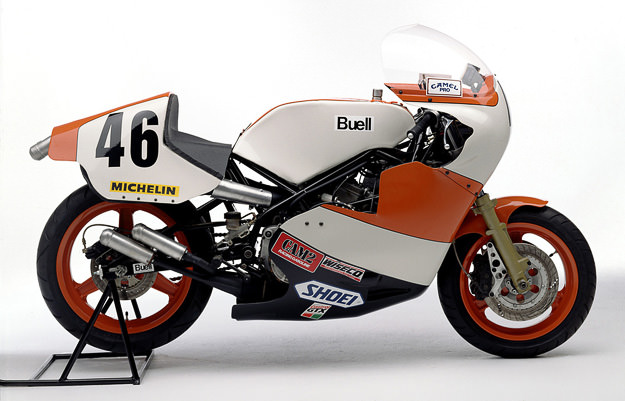
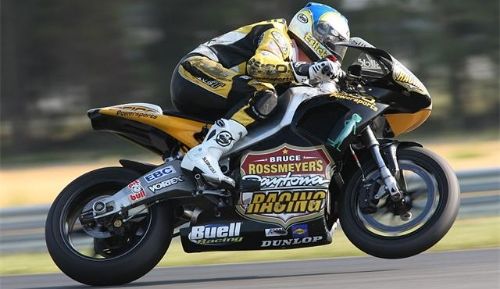


The last Buell motorcycle runs off the assembly line. The 136,923rd such beast.
The first Buell was the RW750, a 750cc, two-stroke, "square-four," rotary-valve machine designed specifically to compete in the AMA Formula One motorcycle road racing championship. But, shortly after the first two RW750 bikes were finished the Formula One Series was canceled. Erik Buell then turned his focus towards racing-inspired, street machines using Harley-Davidson's Sportster motors.
In 1993, Harley-Davidson purchased 49% of Buell, investing $500,000 and taking Erik Buell's house as security. Erik Buell took the deal, against strong advice from his attorney. Harley-Davidson CEO Jeffrey Bleustein had bought it as a skunkworks development. Five years later Harley buys a majority stake and takes control of Buell Motorcycle Company and the company became a subsidiary (who didn't see that coming).
Then to no one's surprise H-D forced Buell to follow a rigid product planning and distribution process, with the philosophy that Buell was the starter brand, the kids bike if you will. Customers would eventually get older and trade up to a Harley. By 2008, Harley's credit arm, Harley-Davidson Financial Services, was struggling, and the lower resale value of Buell motorcycles meant that new bike sales were significantly affected. When Harley CEO Keith Wandell was hired, he immediately questioned why Harley even owned Buell. Wandell, who had never even been on a Harley before being hired, was heard talking about "Erik's racing hobby", and questioned "why anyone would even want to ride a Sportbike" (what an ass). He organized a team to analyze "the adrenaline market", and concluded that Sportbikes would encounter high competition and low profits, while cruisers had high return.
The 'Wandell hammer' fell on October 15, 2009 as Harley Davidson Inc. announced the end of production of Buell Motorcycles to focus more on the Harley Davidson brand. Selling Buell wasn't even considered, as Harley didn't want their dealerships to sell an outside brand, and they didn't feel Buell had much value without the dealer network.

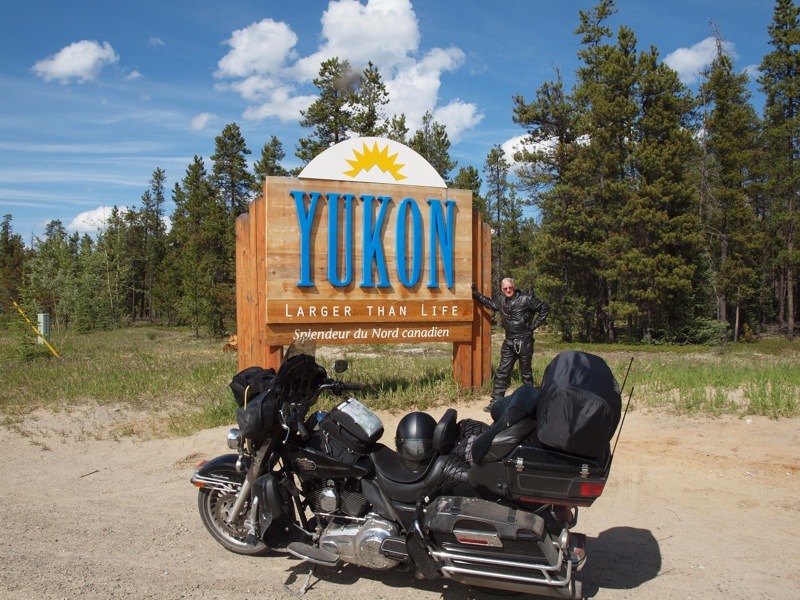
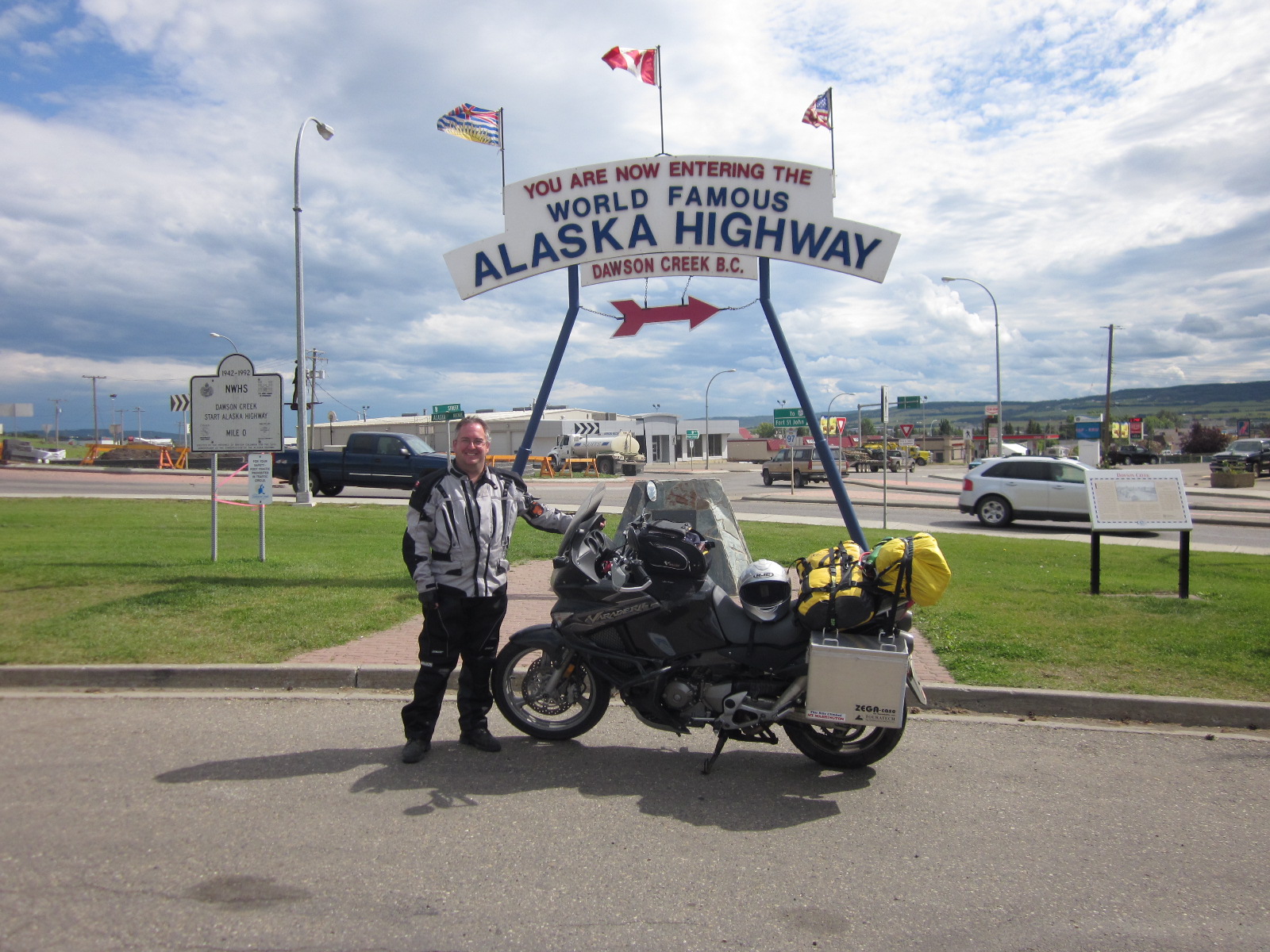

The Alaska Highway officially opens to military traffic.
Until the attack on Pearl Harbor on December 7, 1941, Alaska was just a neglected U.S. territory, "that cold land up north". The Klondike gold rush of the 1880s and ’90s was nothing more than a distant memory, and oil had yet to be discovered. A vast wilderness pretty much left to the bears and the hardy few who lived on the frigid fringe. But, the Japanese attack (coupled with their military incursions into the Aleutian Islands) changed things in an instant. Alaska suddenly became a potential Japanese invasion route to Canada and the Lower 48, so both governments agreed that the road would now be built.
Military necessity dictated the route. The Alaska Highway — like the Burma Road for moving Allied supplies from northern Burma to China — would take little account of mountains, wilderness, water or elevation. So much for scenic, meandering roadways.
The Army Corps of Engineers — augmented by thousands of civilian contractors — began construction through the northern wilderness. Grueling, backbreaking work with bitter sub-zero temps in the winter and murderous mosquito's in the warmer months. In the end, the 1,500-mile highway, stretching from Dawson Creek in British Columbia to Fairbanks, Alaska, was completed in an astounding eight months. In many places, it was a “highway” in name only with stretches of unpaved road, murderous switchbacks and no guard rails or shoulders.
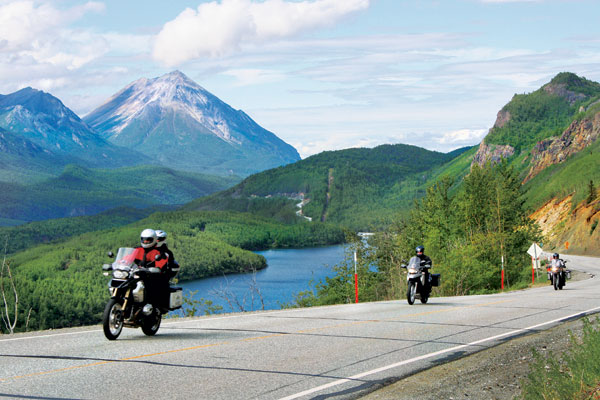
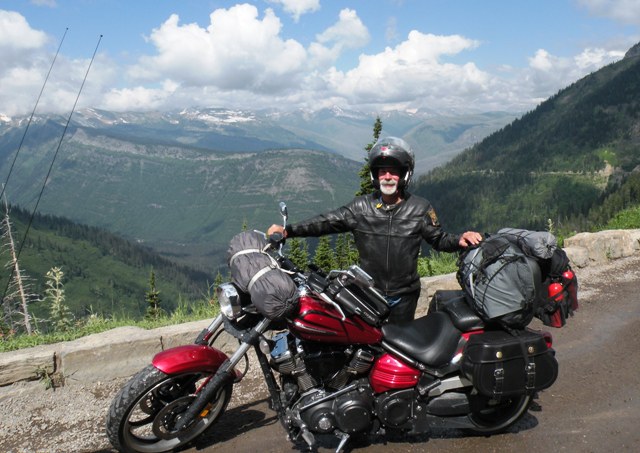
Fast forward 70+ years - Alaskan motorcycle tours abound. Ride some of the most beautiful motorcycle roads not only in the U.S. but, the world.
"Ride the famous Alaska Highway! This 2,650-mile journey, on all paved roads that starts in Seattle, Washington and travels through western Canada to Anchorage, Alaska. Enjoy a 11-day, fully supported, trip of a lifetime with postcard scenery around every turn. Fantastic wildlife viewing opportunities, historic gold towns and open road.
Whidbey Island, Deception Pass, Northern Cascades, Okanogan Valley, British Columbia, Yukon Territory, Kluane National Park,Wrangell-St. Elias National Park and more."
Or...
"This is a no-frill direct route to Alaska. My rationale for this is that everyone has his or her own idea of spectacular roads and past experience shows me that individual bikers map their favorite route home. For example, your return route home can take in the Icefield Parkway (Jasper, Lake Louise, Banff) or Glacier National Park or the Badlands in South Dakota or River Road in Illinois, etc."
or...
"Cruising the open road on a motorcycle offers a totally different perspective of Alaska. The 13 State Scenic Byways and one All America Road transport adventuresome riders into the wild, where the views get better with every bend in the road.
Fields of lupine and fireweed line the road and paint the surrounding hillsides and valleys. Berries plump and juicy tempt riders to abandon the road for the tasty, natural delight. Glaciers, mountains and wildlife in every direction – touring Alaska on a motorcycle is as invigorating as it is scenic."
Spring is coming fast, let's plan a trip...
