Thursday, August 27, 2015

Today in motorcycle history, August 27, 1968


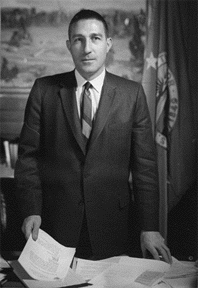
  That All-American motorcycle daredevil, Evel Knievel, has his plans to jump the Grand Canyon denied by that All-American Secretary of the Interior, Stewart Udall. 


  "To perform this feat, it will require the building of an access road and ramp on the very rim of the canyon.These encroachments in the park appear to be quite unjustified."


   Outraged, Evel's Fan Club Prez makes his opinion heard (read, actually).


  "On August 27, 1968, a UPI release reported that permission had been denied for the long awaited vault of the Grand Canyon by one Evel Knievel astride a motorcycle.

  Along with many others, I am disconsolate that we should be denied the type of diversion so pacific to rioting in the streets, general unrest and political chaos.

  It is shocking that we have come to a point that "The Impossible Dream" of one man must be shattered by the custodians of the Abyss of Bliss in Northern Arizona without just cause being stated or any right to appeal being offered."


  C. Jones
  Evel Knievel Booster Club Chairman
  Scottsdale, Arizona.


  Today in motorcycle history proudly supports the National Association for Bikers with a Disability (NABD). www.nabd.org.uk

Friday, August 21, 2015

Today in motorcycle history, August 21, 1969


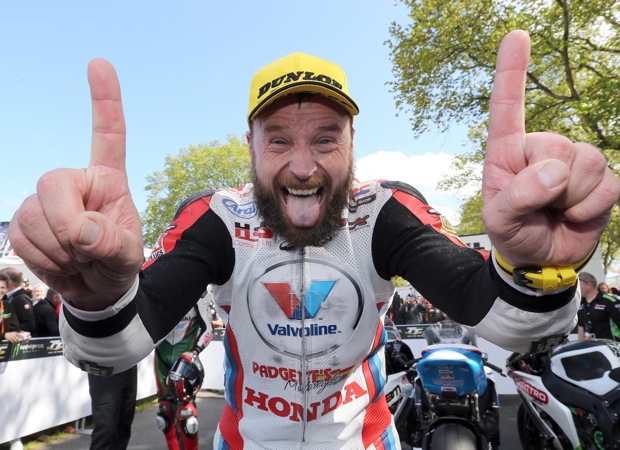
  Ten-time Isle of Man TT winner, "The Flying Kiwi", Bruce Anstey is born in Wellington, New Zealand.


  Bruce Anstey's Isle  of Man TT history in itself is the stuff of legends, head-shaking stories told in bars and pubs, tales of epic lap-speeds passed down to children. A professional motorcycle road racing career that has spanned nineteen years. So far.


  Considered by many to be one of the most consistent racers in GP history, he is currently signed to ride for the Padgett's Honda Racing Team having previously ridden for TAS Suzuki Racing, Valmoto Triumph and DTR Yamaha.


  Anstey made his Isle of Man TT debut in 1996, riding a Yamaha 250cc that finished in 29th place in the Lightweight TT. At the 2003 Isle of Man, Anstey
 won the Junior TT aboard the Valmoto Triumph Daytona, giving Triumph its first TT win in twenty seven years. Twelve years later, on Sunday June 7, 2015, Anstey achieved the highlight of his career, winning the Superbike TT.


  Oh yeah, I forgot to mention, he is a Ten-Time winner of both the North West 200 and the Ulster Grand Prix.


  In 2015, Bruce Anstey was appointed a Member of the New Zealand Order of Merit for services to motorsport.


  Today in motorcycle history proudly supports the National Association for Bikers with a Disability (NABD). www.nabd.org.uk

Thursday, August 20, 2015

Today in motorcycle history, August 20, 1977


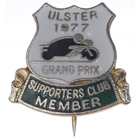
  Tragedy strikes the Ulster Grand Prix as sidecar driver George Oates and his passenger John Molyneux are killed at Tournagrough Road on the Dunrod Circuit.


  Two of Isle of Man's sons, sidecar driver, George Oates and his passenger John Molyneux are killed during the Ulster Grand Prix when they crash their 984cc Kawasaki sidecar at Tournagrough , on the Dundrod Circuit at Dunrod, County Antrim, Northern Ireland.


  Dundrod Circuit has been the home of Ulster Grand Prix since 1953. The nearby Clady Circuit, also in County Antrim, was used for the Ulster Grand Prix from 1922 until 1952.


  Today in motorcycle history proudly supports the National Association for Bikers with a Disability (NABD). www.nabd.org.uk

Wednesday, August 19, 2015

Today in motorcycle history, August 19, 1966


  Former Dutch Grand Prix motorcycle road racer, Wilco Zeelenberg is born in Bleiswijk, the Netherlands. 


  Wilco Zeelenberg began his Grand Prix career in 1986 in the 80cc Class aboard the Portuguese manufactured Casal motorcycle. He would move up to the 250cc Class in 1988, a Class he would ride/race in until he called it a day in 1995. Zeelenberg would race for Yamaha, Honda, Suzuki and Aprila during his nine year career. It would be on a Honda where he would have the best luck, winning the 1990 250cc Class German Grand Prix and in 1991 finding himself ranked fourth in the 250cc Class World Championship. 


  Though they are not motorcycle racers or fabricaters, Wilco, the band, have played in the Netherlands and appeared on "...later on with Joolz Holland".


  Today in motorcycle history proudly supports the National Association for Bikers with a Disability (NABD). www.nabd.org.uk

Tuesday, August 18, 2015

Today in motorcycle history, August 18, 1955


  Editor, illustrator, animator and comic strip cartoonist Harry Palmer dies when he's struck by a patrolman's motorcycle in Miami, Florida.


  Harry Palmer was a world renowned and world-class illustrator, comic strip cartoonist and animator. Best known for his strip, "Babbling Bess" which ran in the New York Evening World from November 11, 1909 until April 6, 1912. He directed early animation shorts for Gaumont Studio's of the comic "Keeping up with the Joneses" by Arthur "Pops" Momand. 

  Harry would be credited for work on 76 animation shorts from 1915-1917.

  Palmer illustrated news dispatches of the Spanish-American War for the St. Louis Post-Dispatch. During the Boxer Rebellion he went to China to sketch the fighting going on over there. 

  Returning to the States, he drew for the Fort Wayne News-Sentinal (Indiana), the Cleveland Leader, the Memphis Commercial Appeal, the Pittsburgh Commercial Gazette, the Denver Republican, the Denver Post and the New York Evening World. He would sketch international affairs for the Evening World for 25 years.


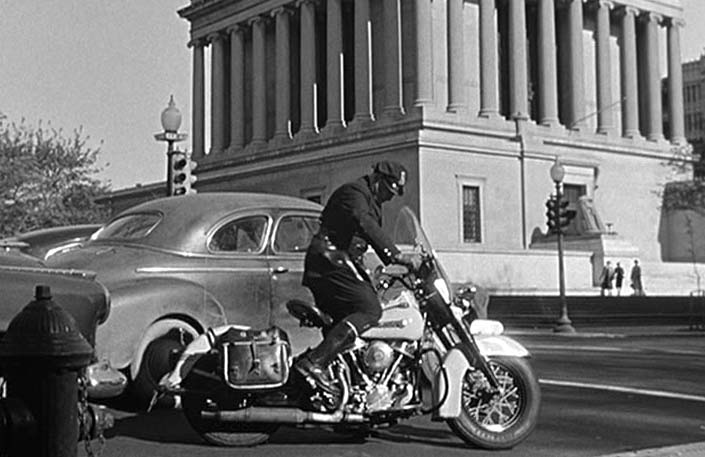
  The Miami Patrolman that hit Harry Palmer was riding a 1951 Harley-Davidson FL Hydra-Glide. Panheads rule!


  Today in motorcycle history proudly supports the National Association for Bikers with a Disability (NABD). www.nabd.org.uk

Monday, August 17, 2015

Today in motorcycle history, August 17, 1950


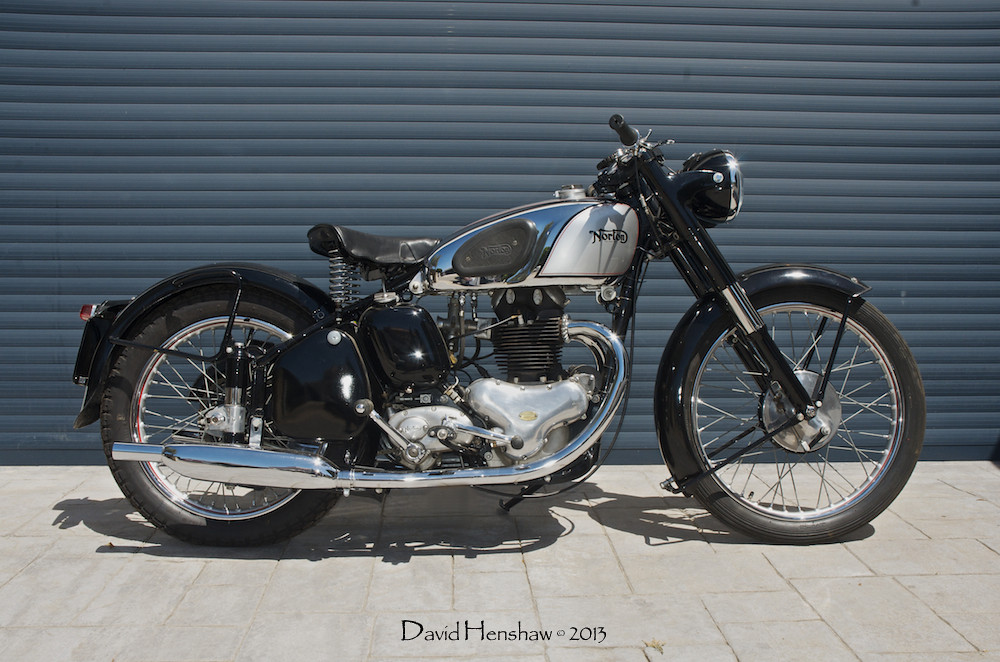
  The August 17, 1950 issue of "Motor Cycling" (the green 'un') features the Norton Dominator, "Bred in the Finest Tradition of British Motor Cycles".


  Inspired by the wickedly popular success of rival Triumph's pre-war Speed Twin, the weight  of Norton's future was put on the shoulders of Bert Hopwood who had worked on the development of Edward Turner's original Speed Twin design. In 1947 Hopwood laid out his design and as hoped, Hopwood came thru, again.


  The Model 7 Dominator was the Norton factory's first twin-cylinder machine of the modern era and made its debut at the 1948 Earls Court Show. 


  Some specs on the Norton; bore and stroke are 66mm x 72.6mm, 497cc, single carb, OHV vertical-twin with 360 degree crankshaft throws (pistons both rise and fall together, but they fire on alternate strokes - all British vertical twins used this except, for arguments sake, the Triumph Bandit, which was never produced beyond the prototype stage. The Bandit used a 180 degree crank, where one piston is up while the other is down). The engine produced 29bhp @ 6000rpm, with minor tweaking 90 mph was easily achieved with a 'flick of the wrist'.


  Original cost in England was £215.


  "The Unapproachable Norton Dominator, the World's Best Roadholder."


  Today in motorcycle history proudly supports the National Association for Bikers with a Disability (NABD). www.nabd.org.uk

Friday, August 14, 2015

Today in motorcycle history, August 14, 1921


  Indian board-track Champion and fan-favorite, Shrimp Burns is killed after crashing his Indian during a board-track race in Toledo, Ohio.


  Albert "Shrimp" Burns was one of the top board-track racers of the 1910's and early '20's, riding for both the Harley-Davidson and Indian factory teams during his career. He was the youngest champion of his era, winning his first title at 15.


  On May 4, 1913, Burns entered his first professional motorcycle race in Sacramento and finished an impressive fourth. That summer, he continued to hone his racing skills on the tracks of Northern California. On August 17, Burns rode against the stars of the day such as Bob Perry, Ray Creviston, Otto Walker and Carl Goudy in a AMA Championship race in Sacramento. Burns took fourth in the 10-mile feature and finished second in another race. The established stars didn't like being upstaged by a 15-year-old kid who looked even younger and rode inferior equipment. Their protests/pouts kept Shrimp out of several of the big race meets that season. He was finally allowed to race against the same group of riders late that season in San Jose and he shocked the riders and the fans by earning his first victory.

  For the next several seasons, Burns continued to race in his home state and steadily earned a following of loyal fans. One reason the fans loved him was because of his toughness and his refusal to quit. In a Marysville, California, race Burns suffered a hard tumble on the wood. He hobbled to the pits and put his bike back together in time for the next race. Riding in obvious pain, Burns went on to win the five-mile final to the roar of the crowd. His friends insisted that Burns be checked by a doctor after the race and it was discovered that he had ridden with a fractured collarbone and broken shoulder.

  In June of 1919, Harley-Davidson signed the 20-year-old rider to his first factory contract.

  With Harley-Davidson, Shrimp Burns was eager to be able to show the rest of the country his talent. On July 4, 1919, he made his first appearance on the East Coast, riding a National meet in Baltimore, Maryland. Burns, who rode in an unusual style by hugging the inside rail around the circuit, won a five-mile solo race as well as a sidecar event. The Baltimore performance set him on the road to gaining a reputation as one of the country's best racers. Burns spent much of the summer of 1919 on a winning streak in Midwest races and even gave the legendary Gene Walker a serious challenge in Atlanta, something no rider had been able to do against the South's almost unbeatable rider.

  In the final major race of the 1919 season, Burns earned the 100-mile National Championship by edging out Ralph Hepburn by mere inches on the board track at Sheepshead Bay, New York.


  Burns shocked the motorcycling community by signing with the Indian factory for the 1920 season. In those days the rivalry between Harley-Davidson and Indian was so intense that it was rare for a rider to make the switch from one factory team to the other. Burns felt he was playing second fiddle to the more established stars of the Harley team and was promised the best available equipment by Indian.

  It didn't take long for Burns to prove his worth to Indian. He took home the very first National title of the 1920 season, winning the 25-mile National at Ascot Park in Los Angeles. According to magazine reports of the day the spectators on hand flooded the track and carried Burns on their shoulders, chanting his name. 

  Burns opened the 1921 season in spectacular fashion, winning on the new 1.25-mile board-track in Beverly Hills, California, before nearly 30,000 fans. After having won the opening race of the day, he crashed hard in the next event, the spill resulted in his hands and arms being a bloody mass of large splinters. The day's racing proceeded with Shrimp apparently out with his injuries. Before the final race of the day the large crowd came to its feet when it was announced that he would attempt to race. He borrowed a bike and rode with bandages covering him from his fingertips to shoulders. Early in the race it appeared that Burns was content to simply ride mid-pack in the draft of the others. On the last lap Burns made his move and went high on the final turn and sped down the steep banking to win the race in one of the afternoon's most dauntless performances. Later, a cartoon strip in a local newspaper showed Shrimp bandaged from head-to-toe racing in front of admiring fans shouting his praises.

  On August 14, during a AMA-sanctioned board-track race in Toledo, Ohio, coming out of a turn Burns ran into the back of *Ray Weishaar's Harley-Davidson. The impact sent Burns into the railing and he later died of massive head injuries. The motorcycling world deeply mourned his loss. Numerous tributes were written about him for months following the accident.


  Albert "Shrimp" Burns was inducted into the AMA Motorcycle Hall of Fame in 1998.


  *Ray Weishaar rode for the H-D's legendary 'Wrecking Crew,' and helped to popularize the nickname 'hog' by carrying the team's mascot, a small pig, around on their victory laps, of which there were many.


  Today in motorcycle history proudly supports the National Association for Bikers with a Disability (NABD). www.nabd.org.uk