Tuesday, May 5, 2015

Today in motorcycle history, May 5, 2014


  A customized Triumph Bonneville T100 built by Renard Speed Shop in Estonia is featured in High Snobiety online magazine.


  This Bonneville T100 was the latest ride from Renard Speed Shop, the custom bike shop in Tallinn, Estonia. The custom shop specializes in cafe racers of all creed and color, Triumph to Suzuki, Harley to Honda. 

   They gave the Bonnie a contemporary cafe twist by slimming down the chassis, adding off-road tires, a custom tank, new lighting, and a matte black paint job to give it some scrambler credentials. An 865cc, fuel-injected scrambler!


  Today in motorcycle history proudly supports the National Association for Bikers with a Disability (NABD). www.nabd.org.uk

Monday, May 4, 2015

Today in motorcycle history, May 4, 1997


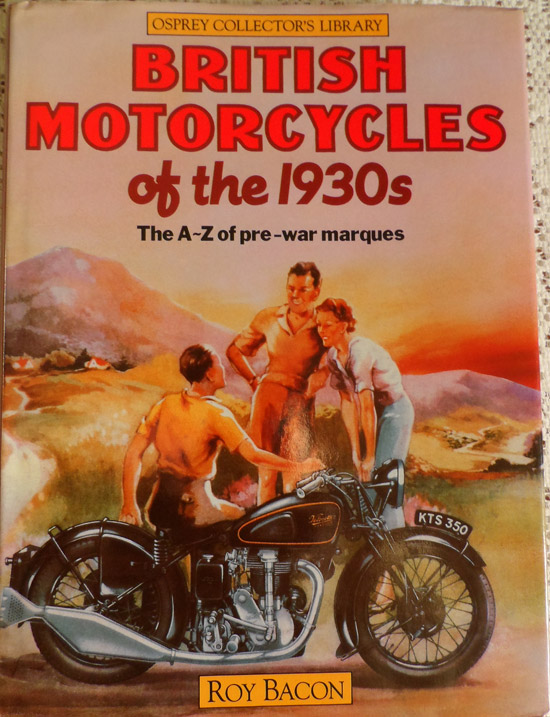
  'The A-Z of British Motorcycles From The 1930s, 1940s, 1950s' by Roy Bacon is published by The Promotional Reprint Co Ltd.


  "When the 1930's began, the biggest motorcycle exporter in the world was Britain. Yet this was a decade when the industry had to struggle to survive the century's worst economic catastrophe, the Depression, and then answer the call to arms that was issued in 1939 at the outbreak of the Second World War.

  During the straitened times of the postwar era, high demand at home went unmet as the cry of the day was "Export or die!". And then came the dawn of new age as the 1950's began. New designs, previously only destined for foreign shores, became available at home. Constant improvement led to machines that were reliable and for which spares could easily be found. But by the end of the 1950's, even though it looked as if the sun would never set on the British motorcycle industry, the Japanese were readying a devastating blow.

  The A-Z OF British Motorcycles From the 1930's 1940's 1950's By Roy Bacon is an invaluable guide to a period that saw an industry at the peak of it's power, yet during which the seeds of its downfall were sown. It's comprehensive coverage takes in familiar names such as Brough Superior, BSA, Matchless, Norton, Triumph, and Vincent. Also includes Ascot Pullin, Grindley-Peerless, Pouncy and SOS. Illustrated throughout with black and white photographs, it is a book no motorcycle enthusiast should be without." - Trevor Downing


  Roy Bacon is the author, co-author or editor of over 50 books about the two-wheeled machines that we all know and love.


  Today in motorcycle history proudly supports the National Association for Bikers with a Disability (NABD). www.nabd.org.uk


Friday, May 1, 2015

Today in motorcycle history, May 1, 1935


  In the end of 1934, PMZ began preparations for the production of the PMZ A-750, with the first three assembled motorcycles put on parade on May 1, 1935 in Podolsk, Russia. Nine more PMZ motorcycles would be presented in Moscow on July 25.


  It seems few people outside of Russia have heard of, and even fewer know anything about, the PMZ ­A-750 motorcycle. The bikes were mainly built at the Podolsk Mechanical Installation located in Moscow Oblast, by a branch of the “Singer” company, which by the 1930’s had already had vast experience in mass ­production of sewing machines coupled with precision machining. The factory adopted the making of thin-­walled cast iron moldings, so when the People's Committee for Heavy Industry decided to set up mass production of motorcycles they chose the town of Podolsk, together with steel town of Izhevsk.

  At the Izh Steel Plant (Izhevsk), a team of motorcycle freaks run by Pyotr Vladimirovich Mozharov took on designing five models of motorcycles in 1928. These machines were built and passed Russia's rigorous vehicle tests, but were never put in mass production.

 
  The German designer and inventor Ernst Neander began to produce motorcycles with a press-formed frame made from sheet steel in 1927. Having studied this design carefully, Mozharov saw its great advantage for mass-production. He visited Germany in 1928 to learn production organization from Neander. He returned home with piles of engine design plans, books, motorcycle brochures and crates of parts. Mrs. Mozharov was not pleased.

  Mozharov chose a press-­formed frame for his A-750. The motor needed to meet the criteria formulated by the Main Department of Machine Building Industry for the Supreme Council of the  National Economy of the USSR: 4-­stroke, two-cylinder 750cc motor, able to adapt to the rough road conditions and capable of attaching a sidecar. After Pyotr and his team visited the Harley­-Davidson factory in Milwaukee, they were in agreement that a 45-degree V­-twin side-valve engine should be used. Though the concept took after the Harley, the resulting engine differed with a number of key design features - a two stage oil pump, the oil tank was made a part of engine casing casting, instead of a magneto Mozharov chose to use a battery ignition with a generator, the headlight was designed to have high/low beam. Among other innovative features the A-750 had an unusual front fork design being a short lever swing-arm type aided by a carriage spring and a vertical U­-bar that provided torsional stiffness and reliability, slightly resembling a BMW.


  After all that it proved to be heavy and unreliable. The A-750 was shit-canned in 1939. 


  Thanks to my friend Ritvars in Latvia for much of  the info.


  Today in motorcycle history proudly supports the National Association for Bikers with a Disability (NABD). www.nabd.org.uk
Thursday, April 30, 2015

Today in motorcycle history, April 30, 1972


  The 1972 Grand Prix season kicks off with the West German GP at Nürburgring Circuit in Nürburg, Rhineland-Palatinate, Germany.


  Defending FIM 50cc World Champion Jan De Vries rides his Kreidler to victory on the last day of April. The Dutchman would battle Spain's Angel Nieto all season long in what turns out to be one of the most exciting GP Classes of 1972. What a finish it would be as the two riders end with 3 checkered flags and 69 points apiece. The championship would be decided on aggregate times, with the winner given the title by mere seconds. On September 23, 1972 the 50cc World Champion is crowned...


  Today in motorcycle history proudly supports the National Association for Bikers with a Disability (NABD). www.nabd.org.uk

Wednesday, April 29, 2015

Today in motorcycle history, April 29, 1979


  Riding his Can Am, Greg Robertson of Woodland Hills, California finishes 17th on Day 2 of the Pontiac 250 Super Cross at the Silverdome in Pontiac, Michigan.


  Greg began his career riding a Coffin Tank CZ250 on May 28, 1972 at California's Carlsbad Raceway. In his debut he pulled off a respectable sixth place finish.


  Belgian motocross legend Joël Robert won three 250cc World Championships ('64,'68,'69) and German Paul Friedrichs won three consecutive 500cc titles ('66,'67,'68) all aboard CZ machines. CZ was the first motorcycle manufacturer to introduce expansion chambers on exhaust systems.


  Today in motorcycle history proudly supports the National Association for Bikers with a Disability (NABD). www.nabd.org.uk
Tuesday, April 28, 2015

Today in motorcycle history, April 28, 2013


Image result for mary thom 


 CNN reports that journalist Mary Thom, a prominent feminist who was an editor of Ms. Magazine in its early years, was killed when she crashed her motorcycle in Yonkers, NY,  just north of New York City.


  Thom had just picked up her 1996 Honda Magna 750 from winter storage when she veered into traffic and was struck by a vehicle upon entering the highway.


  She helped found Ms.Magazine, the influential feminist magazine, and served as an editor there for 20 years.

  After leaving in 1992, she worked as editor in chief of the features section of the non-profit Women's Media Center, which works to raise women's visibility in the media.

  Mary Thom was 68.


  Today in motorcycle history proudly supports the National Association for Bikers with a Disability (NABD). www.nabd.org.uk

Monday, April 27, 2015

Today in motorcycle history, April 27, 1953


  Grand Prix racer and AMA Hall of Famer Pat Hennen is born in Phoenix, Arizona.


  Pat Hennen was the first American to win a 500cc World Grand Prix road race. His victory at the 1976 Finland Grand Prix paved the way for a flood of riders from the US who would come to seriously compete in the sport. He proved that an American could win at the highest echelon of motorcycle racing in an era when few thought it could be done.  


 Hennen was battling with Kenny Roberts for the World Championship when his rapidly rising career was prematurely ended by a crash at the Isle of Man TT in 1978.

  He had just recorded the first sub-twenty minute lap in TT history when he struck a curb at 150 m.p.h. The subsequent crash caused severe head injuries from which Hennen was able to recover over time, but the lasting effects of the crash forced his retirement from racing.


  Pat Hennen was inducted into the AMA Motorcycle Hall of Fame in 2007.


  Today in motorcycle history proudly supports the National Association for Bikers with a Disability (NABD). www.nabd.org.uk