Tuesday, October 27, 2015

Today in motorcycle history, October 27, 1955


  Warner Bros release "Rebel Without a Cause". James Dean stars in Nicholas Ray's film about the moral decay of American youth.


  Three actors, and friends, in the cast of this classic American film have a history with motorcycles...


  James Dean (Jim Stark) - known for his 1955 500cc Triumph TR5 Trophy, he also had a CZ 125cc on which he learned to ride and earned the nickname 'One-spreed Dean', a 500cc Royal Enfield and another 500cc, an Indian Warrior TT.


  Dennis Hopper (Goon) - rode his way thru bike films on chopped Harley-Davidsons, a knucklehead in "Glory Stompers" and the iconic 'Billy Bike' panhead in "Easy Rider".


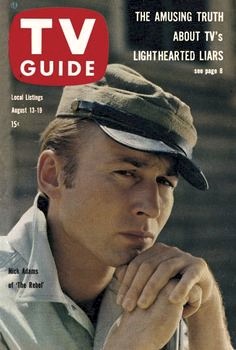
  Nick Adams (Chick) - Dennis Hopper's roommate. Adams would become good friends with Elvis after the death of James Dean, often staying at Graceland and taking late night motorcycle rides around Memphis with the King, both on Elvis' 1956 KH Model Harley-Davidson. The late night motorcycle friendship lasted until 1959 when Nick was forced to spend most of his time in Hollywood making the television series "The Rebel", (he starred as the main character Johnny Yuma). Nick purchased a 1958 600cc Matchless G-11, but due to the high-profile television demands he found himself with less and less time for two-wheels, though his friendship with Elvis lasted until Adams untimely death in 1968.


  Directed by Nicholas Ray, "Rebel Without a Cause" offered both social commentary and an alternative to previous films depicting delinquents in urban slum environments. The film has achieved landmark status for the acting of cultural icon James Dean, fresh from his Oscar nominated role in "East of Eden" and who died before the film's release, in his most celebrated role. This was the only film during Dean's lifetime in which he received top billing. In 1990, "Rebel Without a Cause" was added to Library of Congress's National Film Registry as being deemed "culturally, historically, and aesthetically significant".


  Today is the 60th anniversary of the release.


  Today in motorcycle history proudly supports the National Association for Bikers with a Disability (NABD). www.nabd.org.uk

Monday, October 26, 2015

Today in motorcycle history, October 26, 2013


   "It's not a big motorcycle, just a groovy little motorbike." - The Beach Boys "Little Honda', 1964


   Found this article in the Los Angeles Times dated October 26, 2013...


   "It's not a big motorcycle/Just a groovy little motorbike/It's more fun that a barrel of monkeys/That two wheel bike/We'll ride on out of the town/To any place I know you like"


   Nearly a half-century later, Honda has reinvented the groovy little motorbike for a new generation of young riders. And it can't make them fast enough to satisfy a swarm of buyers.

   Dealers are sold out of the tiny Grom -- a name derived from "grommet," for newbie surfer -- and report waiting lists of up to 40 buyers. Many are offering more than the asking price for the street-legal mini-motorcycle, which starts at $2,999, less than many scooters.

   At Honda of North Hollywood, sales manager Larry Ingraham said he has 10 people on a waiting list, 30 units on order, and not a single Grom in his showroom.

  The Grom sits and rides like a pit bike or a minibike -- like the Honda CT90, Trail 90 or MiniTrail, models that Honda sold by the tens of thousands in the 1970's.

  But it has the look of a shrunken street bike and comes equipped with disc brakes and a four-speed manual transmission. Power comes from a 125cc motor. For a street-legal machine, it's a spare nubbin of a thing that, fully fueled, weighs only 225 pounds.
 At that weight, there's enough power to zip through city traffic but not enough to keep up with "big" motorcycles, like the ones the Beach Boys were singing about in "Little Honda."

  "It climbs the hills like a Matchless/Cause my Honda's built really light"

  The Grom is easy to ride, easy to park and, at a projected 100 miles per gallon, cheap to operate. The base price is about half what the company gets for its bigger 300cc Forza scooter, and just $400 more than the cost of the company's stripped-down 50cc Ruckus.


  To advertise its Super Cub -- the lightweight 1960's step-through machine that inspired that Beach Boys song -- Honda used the slogan: "You meet the nicest people on a Honda."

  For the Grom, the company is taking particular aim at the younger rider. One piece of Grom promotional material reads, "With your own wheels, you can bag the bus and forget about having to beg for rides from your friends or -- shudder -- your Mom." An accompanying photo shows a kid holding a skateboard.


  Today in motorcycle history proudly supports the National Association for Bikers with a Disability (NABD). www.nabd.org.uk

Thursday, October 22, 2015

Today in motorcycle history, October 22, 1957


  Golden State Productions release "Motorcycle Gang", a 78 minute biker drama starring Carl "Alfalfa" Switzer.


  Hoping Carl Switzer's name would  help carry the film, Golden State Productions release "Motorcycle Gang" on an unsuspecting public. 


  I'll give you the basic gist of the film - !!Warning Spoiler Alert!! - a troublemaker, Nick Rogers, gets out of prison after doing a 15-month stretch for being an all-around no-goodnik. He returns to town looking to hook-up with the old club only to find his club brothers have joined a supervised motorcycle club, supervised by a cop of all things, Lt. Joe Watson. Friction erupts between him and the leader of this goody-goody club, and about the charms of club gal, Terry. 


  'Guys Geared Too High For Anybody's Good!', 'Gals Who Mesh Gears With Them!' 

  Filled with all the the elements needed for a hit biker film; bikes, blondes, fights, music, black leather jackets, liquor, cops, a big race scene. All the positive elements were negated by low-budget production, bad writing and poor acting.  The one saving grace is there are some seriously cool-ass vintage British bikes.

  The film does serve one classic line, after arresting the bikers Lt. Joe Watson tells everybody that "the criminals were not bikers, only motorized criminals".


  Determined to make it a World-Wide Box-Office Smash, on Tuesday, April 8, 1958, it's released in Malmo, Sweden, under the title "Motorcykelligan", then Denmark on May 16, 1960 as "Motorcykelbanden", and finally in West Germany on February 3, 1960 as "Lederjack Rechnen ab".


  Today in motorcycle history proudly supports the National Association for Bikers with a Disability (NABD). www.nabd.org.uk

Wednesday, October 21, 2015

Today in motorcycle history, October 21, 2013


  An experimental 1942 U.S. Army Harley-Davidson XA750 is among the rare bikes auctioned off at Shannons Sydney Spring Classic Auction in Sydney, Australia.


  The bikes were part of a private hoard assembled over the course of 40 years and involved the collector himself travelling around the world to visit motorcycle museums, private Harley-Davidson collections and swapmeets seeking out rare machines. His aim was to have a Harley of each kind and type from the earliest models. 


  What follows are examples of the sold bikes and their realized prices...
 
   An unrestored 1914 Model 10F V-Twin with two-speed rear hub expected to fetch up to $28,000 sold instead for a staggering $46,500. 
A 1929 Harley-Davidson JDH twin-cam '74' went for a liver-quivering $57,000. From the "But it's a only a Sportster Dept.", an immaculate 1977 XLCR 1000 cafe racer went for $12,000.


  That experimental U.S. Army Harley-Davidson XA 750 from 1942 went for only $19,500, much to the chagrin of the owner who expected at least $22K.


  Alongside the Harley collection was an array of rare British gems, all with no reserve.

  The 'British Invasion' included a 1956 Triumph Tiger T100 that pocketed the owner $13,000, a 1959 Trophy 500cc - $13,000, (both with alloy engines), when the gavel fell on a pristine 1951 Triumph 5T 500cc sprung hub model it was for $14,500 and a 1969 Trident with signature raygun pipes sold for $13,500.

  Other notable British bikes were two Post-war Ariels – a 1948 500cc Twin went for $14,000, a 1949 Red Hunter 500cc single fetched $13,250 and a 1971 Norton 750cc Fastback that sold for $13,500.


   I feel I need to mention one car that was auctioned, a 1953 Jaguar XK120 Drophead Coupe that sold for $79,500.

  The XK120 was introduced to the buying public at the 1948 Earls Court Motor Show. Every inch of the new Jaguar was sensational - from the stunning lines by Sir William Lyons to the powerful XK straight-six engine. In a world still struggling to recover from the dark days of the war, it's no surprise the XK120 soon captured the public's imagination and a strong showing in competition certainly did the XK120's reputation little harm. The XK120 was powered by an all-new 3.4-litre twin-cam six-cylinder engine developing 160bhp, enough to propel the Jaguar to a top speed of almost 120mph. Initially sold as a roadster, the range was soon expanded to include a stylish fixed-head coupe and, in 1953, a drophead coupe (DHC).


  The DHC's folding top was a masterpiece of simplicity and beautifully trimmed, affording excellent protection from the elements. It was also better equipped inside than it's roadster sibling, with wind-up windows and a walnut-veneered dash. As the last variant of the XK family to arrive, the drophead coupe was unsurprisingly built in the fewest numbers and just 1,760 were made. The XK120 is still highly prized for its looks, comfort and performance and is considered one of the most collectible of all the Jaguars. Be still, my heart.


  Today in motorcycle history proudly supports the National Association for Bikers with a Disability (NABD). www.nabd.org.uk

Tuesday, October 20, 2015

Today in motorcycle history, October 20, 1936


  108 Norton WD16H 490cc side valve, single-cylinder motorcycles are prepared to be shipped to the Royal Army Ordnance Corps (RAOC) Chilwell Depot, Nottinghamshire.


  Beginning in January of 1936, Norton engineers began working with the War Office on a wide range of modifications to the 16H model. Military orders were placed for the 16H ( then designated WD16H for War Department use) from 1936 and continued throughout the course of the war, setting a ten-year record for the longest time the War Office procured a single make of motorcycle. The entire staff of the Norton factory on Bracebridge Street, Birmingham were needed to meet demand - even the racing team found themselves on the WD16H production line. A popular dispatch bike, the WD16H was also used for training, reconnaissance, convoy control and escort duties.

   Military Nortons used paint schemes in Army Service Green, Khaki green, Khaki brown or Olive green. A number of bikes were painted 'desert camouflage' by local workshops in the Middle East and used in Palestine and the North Africa Campaign.

  Norton was one of the main suppliers of motorcycles to the British Army in World War II with a total of nearly 100,000 produced. British Army Nortons were also supplied to the Commonwealth forces such as Australian, New Zealand, India and Canada.


  The 16H would be one of the first civilian models built by Norton after the end of the war. In 1947 it received its final upgrade, the girder front end was canned in favor off telescopic forks to improve handling and give the bike a more 'modern' look. The basic engine configuration proved popular so Norton continued production until the mid-1950's when the fashion for twin cylinder bikes were what all the cool kids wanted .


  Today in motorcycle history proudly supports the National Association for Bikers with a Disability (NABD). www.nabd.org.uk

Monday, October 19, 2015

Today in motorcycle history, October 19, 1971


  Steve Mcqueen purchases his first Husqvarna motocross bike from Edison Dye's Med-International in a Mesa, California.


  Steve McQueen bought his first Husqvarna, a 250cc Cross, from Edison Dye's Med-International and soon after became a regular customer, along with his friend, legendary motorcycle stunt-man Bud Eakins ("The Great Escape"). McQueen would return to buy two Husqvarna 400 Cross bikes that would wind up being used in the 1971 motorcycle film "On Any Sunday".


  Edison Dye is considered by many to be the father of motocross in the United States. In the late 1960's, Dye brought over many of Europe’s top motocross stars to race against the scrambles racers of America. It was no contest. The European riders totally dominated. The Europeans, who had been racing motocross since just after World War II, were far superior in both their riding techniques and training methods. He had a vision....


  Born in Iowa on May 10, 1918, Dye would move to San Diego shortly after the war and ran a successful trucking business for over ten years. Needing something more, he left the trucking business and in 1960, decided to take some time and tour Europe. He did so by opening a motorcycle touring business, running tours to the Isle of Man TT races.


  His travels would eventually expose him to motocross. It was love at first sight. Always eager for new opportunities, Dye called and made an appointment to meet with Husqvarna officials about selling motocross bikes in the US. He took a couple of bikes to the States and asked Malcolm Smith to try one out. Smith told him he only rode Greeves, but he finally agreed to ride the Husky to give Dye his opinion of the bike.


  "We went up in the hills," recalled Dye. "Malcolm was gone a long time and when he came back he had this shit-eating grin on his face. He told me it was a great bike and that he’d like to try it out in a desert race that weekend. He went out won that race by over 22 minutes. After that, Malcolm became one of my best riders. He rode for me for six years and I consider him the best long-distance rider in the world."


  Throughout the late 1960's Dye would bring some of the best European riders to America to race, which led to him forming the influential Inter-Am motocross series. Motocross racing in America was well on its way to its boom years of the 1970's. He finally retired in 1986.
  "I had spent the biggest part of my life racing on the weekends, selling bikes during the week. I was ready for some rest," he says.


  His style and personality seemed a bit out of place in the cow pastures of America with his custom-tailored jackets, often accompanied by impeccably dressed and beautiful women and his trademark 'stroker' cap. Dye was often described as eccentric. He was certainly unconventional.


  Edison Dye will go down in history as one of the most influential figures in U.S. motocross. In the process of trying to sell more Husqvarnas, Dye brought motocross racing to the United States.


  Today in motorcycle history proudly supports the National Association for Bikers with a Disability (NABD). www.nabd.org.uk

Friday, October 16, 2015

Today in motorcycle history, October 16, 1960


  Mansfield Maun Motorcycle Club puts on it's much anticipated annual 'Autumn Scrambles' at Coombes Farm in Farnsfield, Nottinghamshire, UK.


  The 1960 'Autumn Scrambles' attracts nearly 100 entrants, from Hull to Stratford-upon-Avon, riding all marques of machines from  BSA, Cotton and Greeves (including 2 unrecognizable home-built bikes!), thru muck, mud and gravel. The 500cc Class is led by the Tate brothers from Northallerton with Doncaster's John "Winky" Simpson wearing No. 1 in the 250cc Class.


  Mansfield Maun Motorcycle Club was founded on August 20, 1937 by Tom and Vera Crabtree and their close friend George Morris. They initially used to run trials at 'Amen Corner' which was "like a sand bowl" near Clipstone, 10 miles away.


  Mansfield Maun MCC is still going strong today, with family-oriented Trials races (start 'em young!). Upcoming Trials: November 15, 2015 is the Reynolds Cup - Longcliff Tops and on December 6, 2015, the Miller Blacknell Trial - Carsington.


  Support Trials races everywhere!


  Today in motorcycle history proudly supports the National Association for Bikers with a Disability (NABD). www.nabd.org.uk