

Honda announces the release of it's all-new 50cc scooter, the Dio Cesta.
Designed as a "fun and convenient way to commute and get around town". The Dio Cesta features a large, fully-integrated front basket to satisfy all your grocery and liquor store needs. The Dio Cesta will be manufactured by Sundiro Honda Motorcycle Co., Ltd. in China and released in scooter-crazed Japan on July 2.
The 4-stroke, air-cooled engine offers low noise and excellent fuel economy. Fully integrated with the scooter body, the large front basket provides greatly increased carrying capacity and has a rolling shutter to deter theft and hold items securely. The headlight is positioned below the basket so as to remain clear of items at all times, while the handle cover position lamp serves as a convenient light source at night.
Dio Ceasta's seat is a stylish two-tone black with brown, and the accents, such as the floor, are a delicate and appealing brown and it's 28" height makes it ideal for female riders and with that in mind, the steering column is designed for lightness and ease of handling. Introduced with three exciting color options for you or the little lady to pick from: Pearl Procyon Black, Pearl Quench Yellow, and Sirius Blue Metallic.


An electric powered Corbin-Yardney motorcycle climbs Mt. Washington, New Hampshire.
During the week of June 15-20, 1975, the first annual alternative vehicle regatta was held at Mt. Washington, New Hampshire. The regatta was created by environmentalist Charles McArthur, who sincerely believed that the rally was necessary to gather together and test all possible forms of alternative transportation to the internal combustion engine. The regatta placed emphasis on low energy consumption and minimum pollution.
Mike Corbin, president of Corbin-Gentry, and Dr. A.W. Petrocelli, Chief Operating Officer of Yardney Electric in Pawcatuck, Connecticut, met in March to make final arrangements for the high energy density silver zinc battery to be used in the Mt. Washington attempt. On June 17, 1975 this super battery, with a total energy content of over 4,680 watt hours, successfully powered the Corbin designed motorcycle 8 miles to the summit on an average grade of 12%, through 99 hairpin turns, in 26 minutes nonstop.
On June 18, this same winning combination made 2 nonstop trips to the summit, thus setting another record.
Corbin-Gentry seats and accessories company name came from Mike Corbin and the beautiful southern singer Bobbie Gentry (Ode to Billy Joe), who had nothing to do with the company but was great to look at.
Mike Corbin was inducted into the AMA Hall of Fame in 2000.


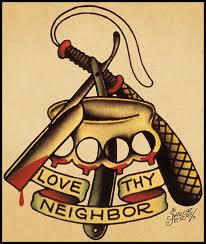


Norman Keith "Sailor Jerry" Collins dies.
He may not have even owned a bike, but there is no denying the mark he left (no pun intended) on hundred's, if not thousand's, of bikers world-wide.
Norman Collins was born on January 14, 1911 in Reno, Nevada, but his family moved shortly afterwards to Northern California. Legend has it that as a child he hopped freight trains across the country and learned the old "needle in hand" tattooing from a man named "Big Mike" from Palmer, Alaska. In 1928 he met Tatts Thomas from Chicago who taught him how to use an electric tattoo machine which he then practiced on drunks brought in from skid row.
In 1930 Norman enlisted in the United States Navy. During his subsequent travels at sea he was exposed to the art and imagery of Southeast Asia. He fell in love with the art, the sea and Hawaii. Collins remained a sailor for his entire life thereafter. Even during his career as a tattoo artist he worked as a licensed skipper of a large three-masted schooner, on which he conducted tours of the Hawaiian islands.
Sailor Jerry's last studio was in Honolulu's Chinatown, then the only place on the island where tattoo studios were located. His work was so widely copied, he took to printing "The Original Sailor Jerry" on his business cards.



Hear Me Roar: Women, Motorcycles, and the Rapture of the Road by Anne Ferrar is released.
"Hear Me Roar" traces the history of women on
motorcycles, shedding light on women riders from
the early 1900s to the modern era. Society's perceptions of female riders are
explored in the context of mass media, fashion, entertainment and motor sports,
where female bikers have always been viewed either as progressive icons, or through the lens
of tired stereotypes.
More than 100 female riders are shown and/or interviewed, including such
exemplary women in the first half of the 20th century as Bessie
Stringfield, the African American “Motorcycle Queen of Miami” in the pre-Civil
Rights era ; the Van Buren sisters, among the first women to cross the continent
on the eve of America's entry into World War I and Dot Robinson, sidecar endurance
champion and Motor Maids co-founder. Riding further into the present day are Catharine Rambeau, who rode a dirt bike solo from Florida to Patagonia, South America; and Sue Slate and Gin Shear, Arctic adventure riders and founders of the first national motorcycle relay ride to benefit breast cancer research. Plus many other ladies who refused to "sit down and be quiet".
To research and
write Hear Me Roar, Anne logged 30,000 miles on her own motorcycle, observing, and participating, in charity rides, poker runs, swap meets and biker bars across the United
States.




The 1959 Isle of Man TT witnessed the first entry from a Japanese team in the World GP series, the four 125cc Hondas being managed by Kiyoshi Kawashima, who had the complete trust and support of Soichiro Honda. This first challenge resulted in Honda claiming 6th, 7th, 8th and 11th in the 125cc light weight class, as well as the Manufacturers’ Team Award.
With the excitement of Honda doing well at Isle of Man a small expeditionary force headed by another Kawashima, Kihachiro Kawashima, left Japan on June 10, 1959. He was going to establish Honda's first overseas base, American Honda Motor Co. in Los Angeles, California.
To save expenses, the Honda lads shared a one-bedroom apartment and stacked motorcycle crates by hand in the company's Pico Boulevard warehouse. Frustration soon set in when the first Honda Dream motorcycles seemed to be too fragile for the sustained speeds and long distances it would need to cover to be successful in America. The 50cc Honda Super Cub cycle used by the team for a run to the liquor store, groceries and other errands roused unexpected interest. Since Piper Aircraft was already using the Super Cub trademark, Honda's pioneering product simply became known as the Honda 50.
Neither a moped nor a scooter nor a conventional motorcycle, the 50 combined a female-friendly step-through chassis with a clean, quiet engine unlike the "loud and dirty" American and British bikes.
Humming like a well-oiled sewing machine, the Honda 50 was the anti-Harley. Sales brochures called it "the thrifty, nifty Honda 50." Instead of selling them through traditional motorcycle dealers, Honda recruited agents in Popular Mechanics and offered sales franchises to hardware stores, lawn-mower repair shops, and even college bookstores. By the end of 1961, Honda's network of 500 dealers reached the East Coast.


