Monday, April 20, 2015

Today in motorcycle history, April 20, 2003


  2001 250cc World Champion and two-time Suzuka 8 Hour winner Daijiro Kato dies from injuries he sustained after crashing during the Japanese Grand Prix. 


  In 2000 Daijiro Kato, teaming with fellow Japanese rider Tohru Ukawa, won the Suzuka 8 Hours in Japan. The 2001 season found Kato totally dominating the 250cc Class, winning 11 races on his way to being crowned World Champion. He would also set a new record for the most points in a single season in the 250cc Class with an unheard of 322 points.  The following season Kato teamed with American rider Colin Edwards to win the 2002 Suzuka 8 Hours for a second time.


  On April 6, 2003, the unthinkable would happen during the Japanese Grand Prix when Kato slams into a wall near Suzuka's Casio Triangle chicane at around 125 mph. Suffering severe head, neck and chest injuries, he would spend two weeks in coma. On April 20, Daijiro Kato would be pronounced dead. He was 26.


  After the 2003 season the FIM named him a Grand Prix "Legend", r
etiring Kato's bike number "74".  Satoshi Motoyama, a fellow Japanese racer and a childhood friend, would wear Daijiro's number on his helmet.


  Italy's Misano World Circuit honored Kato in 2006, (he lived part of the season in the area), by naming a new access road to the circuit "Via Daijiro Kato". 


  Today in motorcycle history proudly supports the National Association for Bikers with a Disability (NABD). www.nabd.org.uk

Friday, April 17, 2015

Today in motorcycle history, April 17, 1976


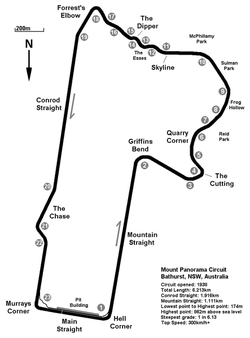
  Ross Barelli is killed when his Suzuki's front disc explodes on Austrailia's famed Mount Panorama Circuit.


  In the final time trials for the Bathurst Unlimited, Ross Barelli is killed when the front disc on his RG500 Suzuki explodes. The freak accident occurs at the end of Con Rod Straight causing him to strike the Armco barrier.


  His brother in-law, Bob Rosenthal, who had been due to ride the ex-Agostini TZ750 Yamaha, withdraws from the meeting.


  Today in motorcycle history proudly supports the National Association for Bikers with a Disability (NABD). www.nabd.org.uk

Thursday, April 16, 2015

Today in motorcycle history, April 16, 1956


  The sticker price of a new BMW motorcycle takes effect today and Erwin Vogelsong of East Orange, New Jersey is the first American to open his wallet. 


  Vogelsong purchases a 500cc R-50 for $915.00 (plus tax) from Butler & Smith in NYC. Dealer records show there was no price haggling. Erwin opted for the 6000 mile guarantee over the 6-month warranty. Good call.

  The 1956 BMW line-up shows other than the R-50, there was the R-69 Super Sport, a 600cc 35hp machine, for $1,345.00, the 600cc R-50 for $1,145.00 and a 250cc R-26 listed at $715.00. Side kick-stands and dual passenger seats were additional.


  Today in motorcycle history proudly supports the National Association for Bikers with a Disability (NABD). www.nabd.org.uk

Wednesday, April 15, 2015

Today in motorcycle history, April 15, 1972


  Evel Knievel's X1-Skycycle prototype makes it's first launch attempt.


  Evel Knievel had hired subcontractor and aeronautical engineer Doug Malewicki to build him a rocket-powered cycle to jump across the Snake River, and called it the X-1 Skycycle. Malwecki's creation was powered by a steam engine built by former Aerojet and Polaris Missile engineer Robert "Bob" Truax.


  Evel joined Truax at Snake River to watch the X-1 prototype's trial launch. The launch starts with such promise before losing speed, then altitude, until finally plummeting into the gorge not even halfway across the river reminiscent of Wile E. Coyote with one of his Acme rockets.


  The decision was then made to have Truax build the Skycycle X-2 and have it take off and fly more like a rocket than a motorcycle.


  Two years later on Sunday, September 8, 1974, at 3:36 p.m. MDT (Mountain Daylight Time) at the south rim of the Snake River Canyon, viewed by millions on live television the launch begins with a rumble as the steam that powers the engine is superheated to 500 °F (260 °C). The drogue parachute prematurely deploys as the X-1 leaves the launching rail and induces significant drag. The Skycycle makes it all the way across the canyon to the north rim, unfortunately the prevailing northwest winds cause it to drift back into the canyon. By the time it reaches the bottom of the canyon, it lands only a few feet from the water on the same side of the canyon from which it had been launched. Then to add insult to injury, if Evel had landed in the water, he likely would have drowned, due to a jumpsuit/harness malfunction which kept him strapped in. 


  As Knievel raises his fist in disappointment Meep Meep echo's thru the canyon.


  Today in motorcycle history proudly supports the National Association for Bikers with a Disability (NABD). www.nabd.org.uk

Tuesday, April 14, 2015

Today in motorcycle history, April 14, 1948


  "The fucker's not much for turning, but it's pure hell on the straightaway. It'll outrun the F-111 until takeoff." - Hunter S. Thompson


  The first production Vincent Black Shadow is completed.


  The Black Shadow Series B was based on an early Rapide that had been re-tuned by the legendary factory test rider/racer George Brown, his brother Cliff, and designer Phil Irvin. The Rapide was ridden, raced and sprinted for nearly a year. One journalist testing it for Motor Cycling magazine was so impressed with it's performance that he borrowed a quote from a Rudyard Kipling poem about an Indian water carrier who saved the life of a British soldier as an introduction to his report:

  ‘Tho’ I’ve belted you an’ flayed you
  By the livin’ Gawd that made you
  You’re a better man than I am, Gunga Din.’

  After that, George Brown’s Rapide was known as Gunga Din. When Phil Vincent decided to build a production version, he ordered the engine to be enameled black to give the new model a dignified appearance to match the name, Black Shadow.


  Engineer Phil Irving, clandestinely assembled a brace of tuned Rapides. The prototypes incorporated gas-flowed cylinder heads, Comet cams, triple valve springs, polished valve rockers, ports, combustion chambers and connecting rods. 1 1/8" Amal 289 carbs replaced the Rapide's 1 1/16". These changes being good for an output of 55hp despite a compression ratio limited to only 7.3:1 by the 72-octane gasoline that was the best available in the UK at the time. 


  In what turned out to be a brilliant marketing move Vincent specified he wanted a 5” diameter ‘150 mph’ speedometer. A top speed of 125 mph was claimed for the Shadow, and this was soon backed by road tests. 47 mph in first gear, 64 mph in second, 86 mph in third...


  Deliveries commenced in the spring of 1948 and only around 70-or-so Series-B Black Shadows had been made before the Series-C’s introduction at that year’s Earl’s Court Motorcycle Show.


  Today in motorcycle history proudly supports the National Association for Bikers with a Disability (NABD). www.nabd.org.uk

Monday, April 13, 2015

Today in motorcycle history, April 13, 1959


  The odd history of the Trail-Breaker two-wheel-drive motorcycle can be traced back to late 1958 when Charles Fehn of San Bernardino, California began wrenching on his latest invention, a "Motorcycle for slow cross-country travel over obstructions and in mountainous regions, and over snow and soft ground". A bit long-winded, perhaps, but it was the birth of the Trail-Breaker. Charlie would apply for his first patent for this beast on April 13, 1959. It wasn't until his third patent attempt, now slimmed down to a "Motorcycle having two driven wheels", filed August 20, 1963, that Charlie would finally be awarded his patent. By the date of the third filing, the bike was already in full-fledged production. It wouldn't be until three years later when on August 23, 1966 the patent would be granted. By that time the bike would be in production by an entirely different company 2,990 miles away in Wilmington, Vermont.


  Today in motorcycle history proudly supports the National Association for Bikers with a Disability (NABD). www.nabd.org.uk

Thursday, April 2, 2015

Today in motorcycle history, April 3-13, 2015


  Today in motorcycle history will be on vacation until Monday, April 13.  Flat roads, warm nights and cold beers beckon... 


  Today in motorcycle history proudly supports the National Association for Bikers with a Disability (NABD). www.nabd.org.uk